
Buying ranch land in Texas is an exciting opportunity, whether you’re looking for a recreational getaway, a working cattle ranch, an investment property, or a place to build your future. However, purchasing a ranch is very different from buying a typical home. Factors like water availability, road access, mineral rights, agricultural exemptions, and land use all play an important role in finding the right property.
Without the right knowledge, it’s easy to overlook details that can affect both the value of the land and your long-term plans. That’s why understanding the buying process before making an offer is one of the smartest investments you can make.
This guide walks you through each step of buying ranch land in Texas. From defining your goals and setting a realistic budget to evaluating the property and completing due diligence, you’ll learn what matters most so you can move forward with confidence.
In This Guide
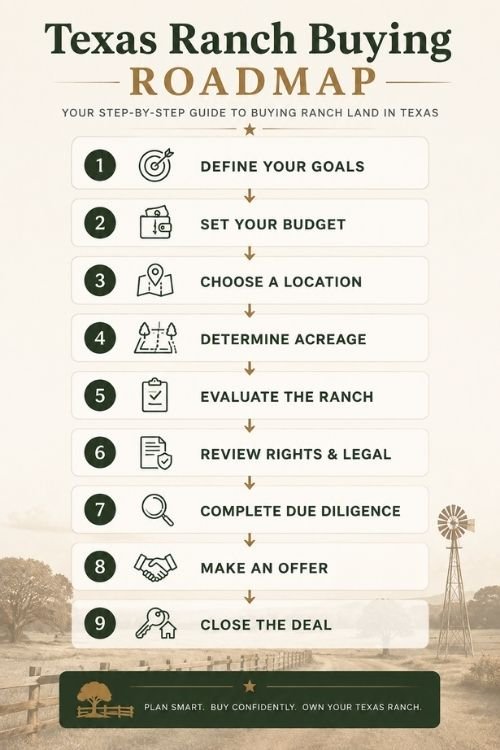
- Decide why you’re buying a ranch
- Determine your budget and financing options
- Choose the right location in Texas
- Decide how much acreage you need
- Evaluate the property before making an offer
- Understand ownership rights and legal considerations
- Complete inspections and due diligence
- Make an offer and close with confidence
Step 1: Define Why You’re Buying Ranch Land
Every successful ranch purchase begins with one simple question:
What do you want your land to do for you?
The answer influences nearly every decision you’ll make, from choosing the right location to determining the amount of acreage and the features you should prioritize.
Many first-time buyers begin browsing ranch listings before clearly defining their goals. While it’s exciting to imagine owning a piece of Texas, understanding how you plan to use the property helps narrow your search and prevents costly mistakes later.
For example, a hunting ranch has very different requirements than a cattle operation. Likewise, someone looking for a weekend retreat won’t have the same priorities as a buyer searching for long-term investment opportunities.
Some of the most common reasons people buy ranch land in Texas include:
Recreational Use
Many buyers are looking for a private escape where they can enjoy hunting, fishing, horseback riding, hiking, or spending weekends outdoors with family and friends.
If recreation is your priority, you’ll likely want to focus on:
- Wildlife habitat
- Mature trees
- Natural water sources
- Privacy
- Scenic views
- Easy access from nearby cities
Agricultural or Livestock Operations
Texas remains one of the country’s leading agricultural states, making ranch ownership an attractive option for raising cattle, horses, goats, or other livestock.
Properties intended for agricultural use should be evaluated for:
- Grazing potential
- Fencing
- Reliable water sources
- Soil quality
- Existing barns or working facilities
Long-Term Investment
Some buyers purchase ranch land primarily as an investment. As Texas continues to grow, well-located rural properties may offer long-term appreciation while providing recreational opportunities in the meantime.
Buyers planning to use their ranch for agricultural production can also explore programs and resources available through the U.S. Department of Agriculture (USDA).
Investment buyers often pay close attention to:
- Population growth
- Infrastructure development
- Future demand
- Road access
- Property improvements
- Resale potential
Building a Future Home
Others purchase ranch land with plans to build a custom home while enjoying additional privacy and open space.
In this case, it’s important to confirm:
- Utility availability
- Buildable locations
- Road access
- Floodplain information
- Local restrictions
Why This Step Matters
Trying to find the “perfect ranch” without first defining your goals often leads to confusion.
Instead of asking:
“Which ranch is the best?”
Ask:
“Which ranch is best for the way I plan to use it?”
That small shift makes it much easier to identify properties that truly fit your lifestyle and budget.
Step 2: Set a Realistic Budget Beyond the Purchase Price
One of the biggest misconceptions among first-time buyers is believing the listing price represents the total cost of owning a ranch.
In reality, purchasing ranch land involves several additional expenses that should be considered before you begin your search.
Planning for these costs early helps you avoid surprises and ensures you’re shopping within a realistic budget.
Purchase Price
Start by determining how much you’re comfortable investing in the property itself.
Keep in mind that ranch values vary depending on factors such as:
- Location
- Acreage
- Water features
- Existing improvements
- Wildlife habitat
- Accessibility
- Agricultural potential
A smaller ranch with excellent water access and quality improvements may command a higher price than a much larger property with limited infrastructure.
Financing
If you don’t plan to purchase the property with cash, explore financing options before touring ranches.
Obtaining pre-approval gives you a clearer understanding of your buying power and shows sellers that you’re a serious buyer.
Because ranch properties differ from traditional residential homes, financing options may vary depending on:
- Property size
- Intended use
- Existing structures
- Agricultural classification
Working with lenders experienced in rural and ranch properties can help simplify the process.
Additional Costs to Budget For
Many buyers overlook expenses that come after the purchase.
Depending on the property, you may also need to budget for:
- Land survey
- Title insurance
- Closing costs
- Property taxes
- Insurance
- Fence repairs
- Road improvements
- Water well maintenance
- Septic systems
- Utility installation
- Equipment and ongoing maintenance
These costs vary from one ranch to another, which is why understanding the property’s condition before closing is so important.
Think About Long-Term Ownership
Owning a ranch is an ongoing investment.
Beyond the initial purchase, you’ll likely be responsible for maintaining roads, fences, water systems, vegetation, and other improvements.
Planning for these responsibilities helps ensure your ranch remains enjoyable and financially sustainable for years to come.
Step 3: Choose the Right Location in Texas
Texas offers an incredible variety of landscapes, climates, and ranching opportunities. Choosing the right location isn’t simply about finding available land—it’s about finding a property that supports your goals.
The region you choose will influence everything from property value and recreational opportunities to accessibility and future appreciation.
When comparing locations, consider questions such as:
- How far are you willing to travel from home?
- Will you visit every weekend or only a few times each year?
- Do you want a secluded property or one with easier access to nearby towns?
- Are you planning to hunt, ranch, build, or invest?
- How important is future resale potential?
You should also evaluate practical considerations, including:
- Road frontage and year-round access
- Availability of utilities
- Water sources
- Terrain and topography
- Local amenities
- Property taxes
- Nearby development
- Environmental conditions
Rather than focusing solely on price per acre, think about how the location will support your long-term plans.
A well-located ranch that aligns with your goals often delivers greater value than a larger property that lacks the features you need.
Once you’ve identified the region that best fits your goals, you can explore ranches for sale that match your budget, preferred acreage, and intended use. Comparing properties within your target area will also give you a better understanding of pricing, available amenities, and market trends.
Step 4: Determine How Much Land You Need
One of the first questions buyers ask is, “How many acres do I need?” The answer depends entirely on how you plan to use the property.
While it may be tempting to purchase the largest ranch your budget allows, more acreage also means higher maintenance costs, additional responsibilities, and potentially greater operating expenses.
Rather than focusing on the number of acres alone, think about how much usable land your goals actually require.
Consider Your Intended Use
Before deciding on acreage, ask yourself:
- Will the ranch be used for recreation or hunting?
- Do you plan to raise cattle or horses?
- Are you interested in farming or agricultural production?
- Will you build a home on the property?
- Is this primarily a long-term investment?
Each purpose comes with different land requirements. For example, a recreational ranch may prioritize wildlife habitat and privacy, while a working ranch needs adequate grazing land, water sources, and infrastructure.
Bigger Isn’t Always Better
A smaller ranch with quality improvements, reliable water, good road access, and healthy vegetation can often provide more value than a much larger property that lacks those features.
When evaluating acreage, consider:
- Terrain and topography
- Usable versus unusable land
- Existing improvements
- Water availability
- Accessibility
- Maintenance requirements
Remember, you’re not simply buying acres—you’re buying the property’s ability to support your goals.
Step 5: Evaluate the Ranch Beyond the Listing Photos
Beautiful photos can make almost any ranch look appealing, but they only tell part of the story.
A successful purchase requires looking beyond the listing and understanding the property’s true condition, functionality, and long-term value.
Water Is One of the Most Valuable Features
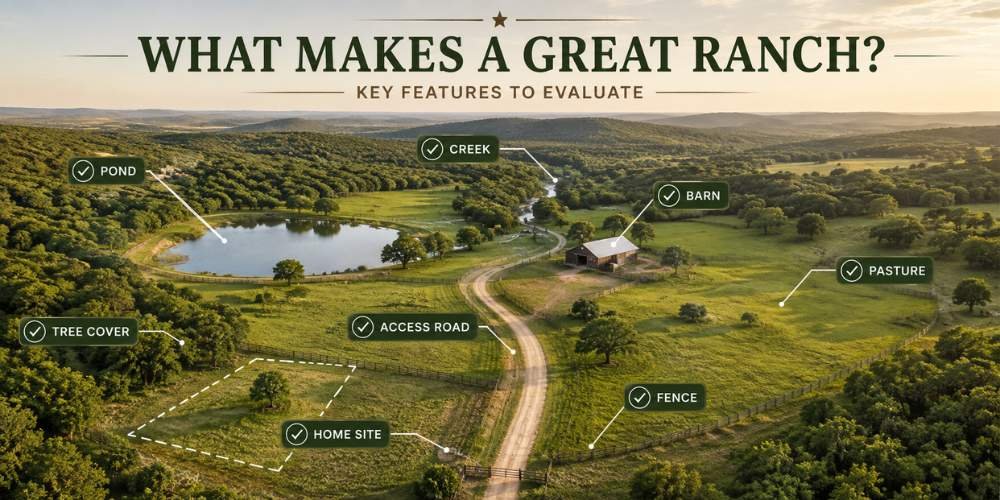
Reliable water access is often one of the most important factors when evaluating ranch land.
Depending on your intended use, look for features such as:
- Ponds
- Lakes
- Creeks
- Springs
- Water wells
- Municipal water availability
If the property relies on wells, verify their condition, production capacity, and maintenance history.
Road Access Matters More Than Many Buyers Realize
Ask yourself:
- Does the property have legal access?
- Are the roads maintained year-round?
- Can large vehicles or equipment easily enter the property?
- Will weather affect accessibility?
Limited or difficult access can impact both your experience and the property’s future resale value.
Existing Improvements
Some ranches include improvements that can save significant time and money after closing.
These may include:
- Barns
- Equipment sheds
- Fencing
- Working pens
- Homes or cabins
- Utility connections
Inspect each improvement carefully rather than assuming it’s in good condition.
Understand the Terrain
Not every acre offers the same value.
Walk the property whenever possible and evaluate:
- Elevation changes
- Flood-prone areas
- Dense vegetation
- Rock formations
- Soil conditions
- Buildable locations
The goal is to understand how the land can realistically be used—not just how it appears in photographs.
Wildlife and Natural Resources
If recreation or hunting is part of your plan, pay close attention to the property’s natural characteristics. People interested in hunting or wildlife management can also review habitat information, conservation programs, and hunting regulations through the Texas Parks and Wildlife Department.
Look for:
- Native vegetation
- Wildlife habitat
- Food sources
- Water availability
- Existing game management practices
These features can significantly influence both enjoyment and long-term value.
Step 6: Understand Surface Rights, Mineral Rights, and Easements
One of the biggest differences between buying a ranch land and purchasing a residential home is understanding exactly what you’re buying.
Land ownership in Texas can involve several different property rights, and reviewing them before closing is essential.
Surface Rights
Surface rights allow you to use the land above ground.
This generally includes activities such as:
- Building structures
- Farming
- Grazing livestock
- Hunting
- Recreational use
However, owning the surface doesn’t always mean you own everything beneath it.
Mineral Rights
Texas has a long history of oil and gas production.
In many cases, mineral rights have been separated from the property’s surface ownership.
If someone else owns those mineral rights, they may have legal rights related to mineral exploration or extraction, depending on the terms of the ownership.
Understanding these rights before purchasing the property helps prevent unexpected surprises in the future.
Easements
An easement gives another person or organization the legal right to use a portion of your property for a specific purpose.
Common examples include:
- Utility easements
- Shared driveways
- Pipeline easements
- Access roads
Not all easements are problematic, but they should be reviewed carefully to understand how they may affect your plans for the property.
Agricultural Exemptions
Many Texas ranches qualify for agricultural or wildlife tax exemptions, which can significantly reduce annual property taxes.
You can learn more about eligibility requirements and property tax valuation through the Texas Comptroller’s Agricultural Appraisal resources.
If maintaining an exemption is important to you, verify:
- Whether one currently exists
- The requirements for keeping it
- Any changes that could affect eligibility after purchase
Understanding these details early can help you make more informed financial decisions.
Step 7: Complete Your Due Diligence Before Making an Offer
Finding the right ranch is exciting, but it’s important not to rush into a purchase.
Due diligence is your opportunity to verify the property’s condition, confirm ownership details, and identify any issues before the transaction is finalized.
This step can help you avoid expensive surprises after closing.
Review the Property Survey
A current survey helps confirm:
- Property boundaries
- Acreage
- Easements
- Access points
- Improvements
If an existing survey is outdated, consider obtaining a new one.
Conduct a Property Inspection
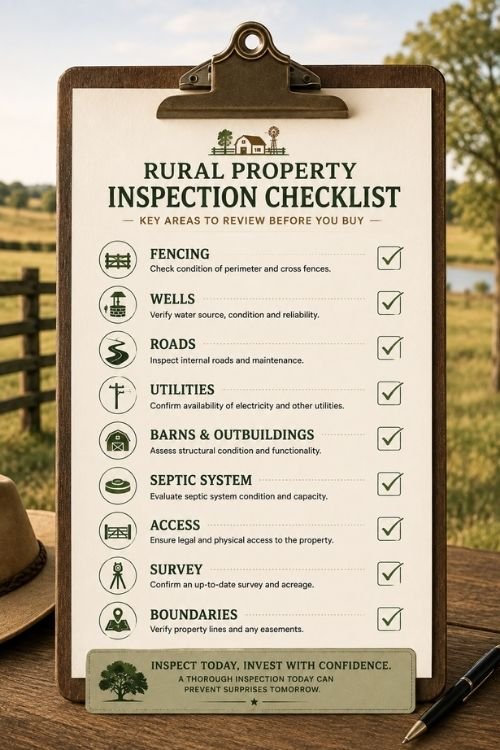
Unlike a traditional home inspection, evaluating rural property often involves additional considerations.
Depending on the ranch, inspections may include:
- Water wells
- Septic systems
- Fencing
- Barns and outbuildings
- Roads
- Utility connections
- Existing homes or cabins
Understanding the property’s overall condition allows you to budget for repairs or negotiate if necessary.
Verify Title Information
A title review helps confirm:
- Legal ownership
- Outstanding liens
- Easements
- Restrictions
- Other recorded issues
Working with a reputable title company helps ensure the transaction proceeds smoothly.
Confirm Property Access
Never assume access simply because a road exists.
Verify that the property has documented legal access and understand any shared access agreements that may apply.
Review Local Regulations
Depending on your plans, you may also need to research:
- County regulations
- Building requirements
- Floodplain maps
- Environmental considerations
- Utility availability
Before purchasing a ranch, it’s also a good idea to verify whether the property is located within a designated flood hazard area using the FEMA Flood Map Service Center.
Taking the time to complete these checks can save significant time, money, and frustration after closing.
Step 8: Work with the Right Professionals
Buying ranch land in Texas involves more than selecting the right property. You’ll also need experienced professionals who understand rural real estate and can help you navigate the buying process with confidence.
Depending on the property and your goals, your team may include:
- A ranch real estate broker or agent
- A lender experienced in rural properties
- A title company
- A land surveyor
- Property inspectors
- An attorney, if additional legal guidance is needed
Working with professionals who regularly handle ranch transactions can help you identify potential issues early, explain complex details, and keep the purchase moving smoothly.
An experienced ranch broker can also provide valuable insight into local markets, comparable property values, agricultural exemptions, water availability, and other factors that may not be obvious from an online listing.
Step 9: Make an Offer and Prepare for Closing
Once you’ve found the right property and completed your due diligence, the final step is negotiating the purchase and preparing for closing.
While every transaction is unique, the process generally includes:
- Submitting an offer.
- Negotiating the purchase price and terms.
- Completing inspections and any remaining due diligence.
- Finalizing financing, if applicable.
- Reviewing title documents.
- Completing the closing process.
- Taking ownership of your ranch.
Before signing the final paperwork, take one last opportunity to review all documents and confirm that any agreed-upon repairs, improvements, or conditions have been addressed.
Buying a ranch is a significant investment, and taking your time during the final stages can help ensure there are no unexpected surprises after closing.
Common Mistakes to Avoid When Buying Ranch Land in Texas
Even experienced buyers can overlook important details. Avoiding these common mistakes can help you make a more informed purchase.
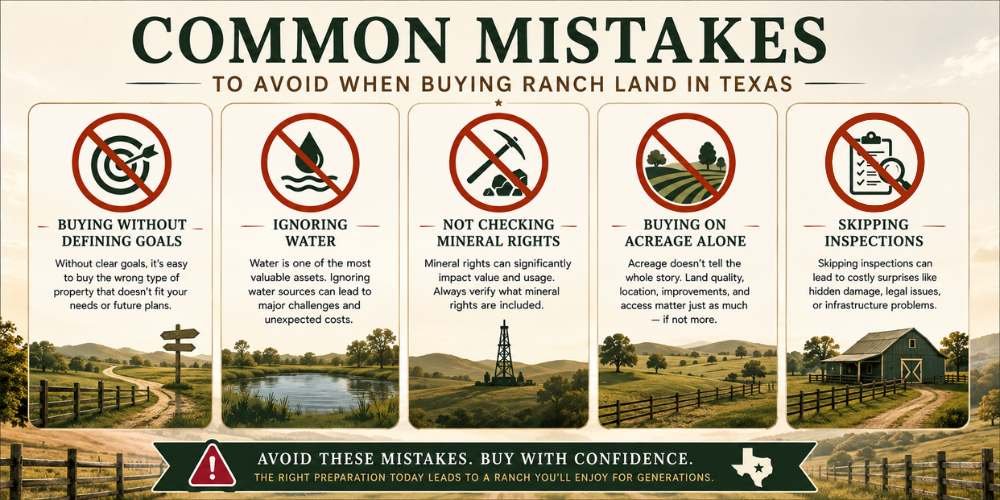
Buying Before Defining Your Goals
Without a clear purpose, it’s easy to purchase a property that doesn’t fit your long-term plans.
Know how you intend to use the land before you begin your search.
Focusing Only on Price Per Acre
A lower price doesn’t always mean better value.
Features such as water, road access, improvements, wildlife habitat, and location often have a much greater impact on a property’s usability and long-term value.
Skipping Due Diligence
Never rely solely on listing photos or marketing descriptions.
Always verify:
- Property boundaries
- Water availability
- Access
- Easements
- Existing improvements
- Property condition
Overlooking Ownership Rights
Surface rights, mineral rights, and easements can affect how you use your property.
Understanding these details before closing helps prevent future surprises.
Underestimating Ownership Costs
The purchase price is only part of the investment.
Ongoing expenses such as maintenance, fencing, insurance, property taxes, and utility improvements should also be part of your financial planning.
Ranch Buying Checklist
Before making an offer, use this checklist to ensure you’ve covered the essentials.
✔ Clearly define your goals for the property.
✔ Establish your budget and financing.
✔ Choose a location that supports your long-term plans.
✔ Determine the acreage you actually need.
✔ Evaluate water sources and road access.
✔ Inspect existing improvements.
✔ Review surface rights, mineral rights, and easements.
✔ Verify agricultural exemption status, if applicable.
✔ Complete inspections and surveys.
✔ Review title information.
✔ Understand ongoing ownership costs.
✔ Work with experienced professionals throughout the buying process.
Checking each of these items before closing can help you move forward with greater confidence and reduce the risk of unexpected issues after purchase.
Frequently Asked Questions
Is buying ranch land different from buying a home?
Yes. Ranch purchases often involve additional considerations such as water sources, road access, agricultural exemptions, mineral rights, easements, and larger land evaluations that are not typically part of a residential transaction.
Can non-Texas residents buy ranch land in Texas?
Yes. Texas does not require buyers to be residents of the state to purchase ranch land. However, it’s important to understand local regulations, financing options, and property ownership considerations before completing the purchase.
How much land do I need for a ranch?
The right amount of acreage depends on how you plan to use the property. A recreational retreat, cattle operation, hunting ranch, or investment property will all have different land requirements.
Why are mineral rights important?
Mineral rights determine who owns the minerals beneath the property’s surface. In Texas, these rights are sometimes owned separately from the land itself, making it important to understand exactly what is included in the purchase.
Should I have a ranch inspected before buying?
Yes. A thorough inspection and due diligence process can help identify issues related to water systems, fencing, structures, access, utilities, and other important features before the purchase is finalized.
Final Thoughts
Buying ranch land in Texas is about more than finding a property that looks good on paper. It’s about choosing land that supports your goals today while offering long-term value for the future.
By taking the time to define your purpose, establish a realistic budget, evaluate each property’s features, understand ownership rights, and complete thorough due diligence, you’ll be in a much stronger position to make a confident purchase.
Whether you’re searching for a recreational retreat, a working ranch, an investment property, or a place to build your future, following a structured buying process can help you avoid costly mistakes and find a property that truly meets your needs.

Finding the right ranch starts with more than browsing listings—it starts with having the right guidance.
At TX Property Group, we help buyers navigate every stage of the ranch buying process, from identifying the right property to understanding land features, evaluating opportunities, and making informed decisions with confidence.
If you’re ready to begin your search or have questions about buying ranch land in Texas, our team is here to help you take the next step.
